At Finsery, we provide independent, research-driven financial content. To keep our articles, tools, and resources free for readers, we may receive compensation from companies featured on our site through affiliate links, referral partnerships, or paid placements. This compensation may influence how and where products appear on our site (such as the order or placement of products within categories), but it does not affect our editorial opinions, recommendations, or reviews, which remain based on objective analysis.
While we strive to ensure the accuracy and timeliness of all information, Finsery makes no representations or warranties regarding the completeness, applicability, or future availability of any product, service, or offer. Product terms, conditions, and policies are provided by the respective companies and may change without notice.
We do not include every company or financial product available in the marketplace. Some offers may be subject to eligibility requirements, approval processes, or geographic restrictions. Your personal circumstances may impact whether a product is right for you.
Any compensation received by Finsery does not constitute an endorsement of any company or product. All content is provided for informational purposes only and should not be considered personalised financial, investment, tax, or legal advice. Please consult a certified professional for advice specific to your situation.
American express card
Published:
1 min read
Finsery Editorial Team
Finsery Editorial Team
Finance Writers & Reviewers
Editorial Process
Written & Edited by Finsery Team
Reviewed for Accuracy
The Finsery Editorial Team ensures every article meets the highest standards of accuracy and transparency in financial reporting.
Editorial Note:
The information provided on
Finsery
is for general informational purposes only and is not intended as financial or professional advice.
Our team conducts independent research to share insights we believe are accurate and helpful at the time of publication.
Some of the products or services featured on this page are from our
advertising partners,
who may compensate us if you click through links on our site.
However, affiliate relationships do not influence our editorial opinions, our reviews and recommendations remain based on our own independent research and analysis.
Editorial Note:
Finsery provides general informational content only, not financial advice.
We may earn a commission from our advertising partners when you click links, but our editorial opinions remain independent.
The content on
Finsery
is created for informational and educational purposes only and should not be taken as financial advice.
While we do our best to ensure accuracy and relevance at the time of publication,
details may change over time or vary by individual circumstance.
Finsery
may earn a small commission when you click on certain links,
but our editorial opinions remain independent.
See our full disclaimer.
Top 10 Capital One Rewards Credit Cards for Summer 2026
Published:
8 min read
Finsery Editorial Team
Finsery Editorial Team
Finance Writers & Reviewers
Editorial Process
Written & Edited by Finsery Team
Reviewed for Accuracy
The Finsery Editorial Team ensures every article meets the highest standards of accuracy and transparency in financial reporting.
Editorial Note:
The information provided on
Finsery
is for general informational purposes only and is not intended as financial or professional advice.
Our team conducts independent research to share insights we believe are accurate and helpful at the time of publication.
Some of the products or services featured on this page are from our
advertising partners,
who may compensate us if you click through links on our site.
However, affiliate relationships do not influence our editorial opinions, our reviews and recommendations remain based on our own independent research and analysis.
Editorial Note:
Finsery provides general informational content only, not financial advice.
We may earn a commission from our advertising partners when you click links, but our editorial opinions remain independent.
As summer 2026 approaches, many US consumers are reevaluating their credit card options to maximize rewards on travel, dining, and everyday purchases. Capital One credit cards continue to stand out with competitive cash back rates, flexible redemption options, and travel benefits tailored to seasonal spending patterns. This guide explores the top 10 Capital One credit cards ideal for summer spending, backed by current market trends and consumer behavior insights.
Why Capital One Credit Cards Shine in Summer 2026
Capital One has maintained a strong presence in the US credit card market by aligning its rewards programs with evolving consumer habits, especially during high-spending seasons like summer. With features such as no foreign transaction fees, bonus reward categories, and easy point transfers to travel partners, these cards support everything from road trips to international vacations. Their digital tools also allow users to track redemptions and spending trends in real time, making financial management more intuitive.
Pro Tip
Capital One has maintained a strong presence in the US credit card market by aligning its rewards programs with evolving consumer habits, especially during high-spending seasons like summer.
Capital One has maintained a strong presence in the US credit card market by aligning its rewards programs with evolving consumer habits, especially during high-spending seasons like summer.
A key reason for their seasonal appeal is the alignment of bonus categories with summer spending. For example, many Capital One cards offer elevated rewards at gas stations, restaurants, and online grocery stores—categories that see increased use during summer months. A family planning a cross-country road trip from Chicago to Yellowstone might use a Capital One card to earn 3x to 4x rewards on fuel and dining, lowering the overall cost of their adventure. This practical benefit, combined with widespread acceptance, makes these cards a smart choice for seasonal planning.
Best Overall Capital One Credit Card for Summer Travel
Capital One Venture X Rewards Credit Card
The Capital One Venture X Rewards Credit Card remains a top pick for frequent travelers in 2026. It offers 10x miles on hotels and rental cars booked through Capital One Travel and 5x miles on flights booked the same way. Everyday purchases earn 2x miles, providing consistent value. The card’s $395 annual fee is offset by a $300 annual travel credit, Priority Pass lounge access, and up to $100 in TSA PreCheck or Global Entry fee reimbursements.
This card is particularly useful for travelers visiting international destinations like Cancun or London, where lounge access and travel credits enhance the overall experience. The miles never expire and can be transferred to over a dozen airline and hotel partners. Finsery users have noted high satisfaction with this card’s ability to consolidate travel perks and rewards in one place.
Capital One Venture Rewards Credit Card
For those seeking a lower annual fee, the Capital One Venture Rewards Credit Card offers a streamlined alternative. Priced at $95 per year, it delivers 5x miles on travel purchases made through Capital One Travel and 2x on all other spending. New cardholders often receive a substantial bonus after meeting an initial spending requirement, making it easier to fund a summer getaway.
A teacher from Atlanta using this card to book a flight to Hawaii might earn enough miles for a free companion ticket within two years of regular use. The ability to use miles as statement credits for any travel purchase adds flexibility, especially for last-minute bookings or changes in plans. This adaptability makes it a reliable option for unpredictable summer itineraries.
Highest Cash Back Rewards with Capital One Credit Cards
Capital One Quicksilver Cash Rewards Credit Card
The Capital One Quicksilver card continues to be a favorite for cash back seekers. It offers unlimited 5% cash back on hotels and rental cars booked through Capital One Travel for the first 12 months, then reverts to 2% on all purchases. It also provides 1.5% cash back on all other spending with no category restrictions.
Its flat-rate structure simplifies rewards tracking, making it ideal for those who prefer straightforward benefits. A freelance designer in Austin using this card for daily coffee, groceries, and a summer flight to New Orleans could earn over $200 in cash back annually with moderate spending. This ease of earning and redeeming makes it a consistent performer among Capital One credit cards.
Capital One QuicksilverOne Cash Rewards Credit Card
The QuicksilverOne card is designed for individuals with fair credit who still want to earn solid cash back. It offers 1.5% cash back on every purchase, with no rotating categories or exclusions. While it has a higher APR than the Quicksilver, it provides the same straightforward rewards system, helping users build financial confidence.
Earn 1.5% cash back on gas, which benefits road trippers
No annual fee makes it accessible year-round
Cash back can be used for travel, gift cards, or statement credits
Automatic credit line reviews after six months of on-time payments
Access to Capital One’s Eno, a free virtual assistant for fraud alerts
A college graduate in Denver using this card to rent a car for a summer internship in Seattle can start building credit while earning redeemable rewards, showcasing the card’s dual functionality.
Best Capital One Credit Card for Everyday Summer Spending
Capital One SavorOne Cash Rewards Credit Card
The SavorOne card focuses on dining, entertainment, and grocery spending—key areas during summer months. It offers unlimited 3% cash back on dining and entertainment, 2% on grocery stores, and 1% on all other purchases. There’s no annual fee, and new users may qualify for a cash bonus after meeting an initial spend requirement.
For a couple hosting a July 4th barbecue in Miami, purchases at local seafood markets and beverage stores would earn elevated rewards. They could later redeem those earnings for a dinner out or a concert ticket, maximizing seasonal enjoyment. The card’s lack of a fee and high bonus categories make it a smart pick for urban dwellers with active social calendars.
Optimizing SavorOne for Summer Events
Concerts, outdoor festivals, and movie nights see peak attendance between June and August. The SavorOne’s 3% cash back on entertainment includes ticket purchases through platforms like Ticketmaster or Eventbrite. Combined with dining rewards, this card can significantly reduce the cost of weekend outings.
Premium Perks: Luxury Travel with Capital One Credit Cards
For high-income earners seeking a luxury experience, Capital One’s premium cards deliver exclusive benefits. These include concierge services, elite hotel status, and access to invitation-only events. The Venture X, in particular, includes a complimentary Capital One Lounge membership, open to cardholders and guests at major US airports.
$300 annual travel credit applicable to bookings on Capital One Travel
Complimentary Priority Pass Select membership
10,000 bonus miles each account anniversary year
First-class airport lounge access with shower suites and gourmet food
Two free one-time guest passes annually
A executive flying monthly between New York and San Francisco could save thousands in lounge fees and airport meals using these benefits. Finsery’s summer 2026 spending report highlighted a 27% increase in lounge usage among premium cardholders, signaling growing demand for comfort and convenience.
Best No Annual Fee Capital One Credit Cards for Summer
Capital One Platinum Credit Card
The Capital One Platinum Credit Card is an excellent no-fee option for those focused on credit building. It offers no rewards but provides a simple way to manage spending and report activity to major credit bureaus. It features a variable APR and no foreign transaction fees, making it suitable for light international use.
A college student studying abroad in Lisbon for the summer can use this card to make small, consistent purchases and build a payment history. While it doesn’t earn rewards, its accessibility and reliability support long-term financial health, especially when used responsibly.
Capital One QuicksilverOne for Fair Credit
As previously mentioned, the QuicksilverOne offers rewards even with fair credit and no annual fee. This dual advantage is rare in the credit card market. Its 1.5% flat cash back rate ensures users are rewarded from day one, regardless of spending category changes.
Combining low entry barriers with steady rewards, this card bridges the gap between credit building and value earning. A nurse in Cleveland using it for work-related expenses and weekend dinners can gradually improve her credit score while accumulating cash back.
How to Choose the Right Capital One Credit Card for Your Summer Goals
Selecting the best Capital One credit card depends on individual spending habits, credit profile, and summer plans. Travelers should prioritize cards with bonus miles and travel credits, while families focused on local activities may prefer cash back on dining and groceries. Those rebuilding credit should look for no-fee options with strong reporting features.
It’s also important to consider redemption flexibility. Cards like the Venture X allow point transfers to airline partners, ideal for complex itineraries. In contrast, Quicksilver users might prefer simple cash deposits. Aligning card benefits with personal goals ensures maximum value during the high-spend summer months.
[EDITOR REVIEW REQUIRED]
Capital One Credit Limit Increase: How to Get Approved
Capital One credit limit increases may be requested through the Capital One mobile app or website. You will need to provide personal and financial information to verify your income and repayment abilities. Some factors that may contribute to a credit limit increase include having a longer credit history, consistent payments, and a stable income. To be approved, you may need to meet certain requirements or have a higher credit score.
Your financial journey starts here
Be the first to receive expert financial insights, guides, and product reviews when our newsletter launches.
Stay ahead with smarter money decisions.
By clicking "Subscribe," you agree to join our early access list and accept our
Privacy Policy
and
Terms of Use
. You may unsubscribe at any time.
The content on
Finsery
is created for informational and educational purposes only and should not be taken as financial advice.
While we do our best to ensure accuracy and relevance at the time of publication,
details may change over time or vary by individual circumstance.
Finsery
may earn a small commission when you click on certain links,
but our editorial opinions remain independent.
See our full disclaimer.
U.S. Average Credit Card Debt In 2026
Updated:
4 min read
Finsery Editorial Team
Finsery Editorial Team
Finance Writers & Reviewers
Editorial Process
Written & Edited by Finsery Team
Reviewed for Accuracy
The Finsery Editorial Team ensures every article meets the highest standards of accuracy and transparency in financial reporting.
Editorial Note:
The information provided on
Finsery
is for general informational purposes only and is not intended as financial or professional advice.
Our team conducts independent research to share insights we believe are accurate and helpful at the time of publication.
Some of the products or services featured on this page are from our
advertising partners,
who may compensate us if you click through links on our site.
However, affiliate relationships do not influence our editorial opinions, our reviews and recommendations remain based on our own independent research and analysis.
Editorial Note:
Finsery provides general informational content only, not financial advice.
We may earn a commission from our advertising partners when you click links, but our editorial opinions remain independent.
U.S. Average Credit Card Debt In 2026: A Growing Financial Concern
The U.S. average credit card debt continues to rise, reflecting shifting consumer spending habits and economic pressures. As of 2026, experts project an ongoing uptrend driven by inflation, higher interest rates, and increased reliance on credit for daily expenses. This article explores the latest trends, regional differences, and practical strategies to manage personal debt responsibly.
What Is The Projected U.S. Average Credit Card Debt In 2026?
While final 2026 figures are not yet available, current trends suggest the U.S. average credit card debt could exceed $7,000 per household. This builds on data from 2023 and 2024, where average balances rose steadily due to inflation and high cost of living. Credit use has also increased among younger adults, particularly those between 18 and 34, who are leveraging cards for essentials like groceries and utilities.
One factor contributing to higher balances is the rise in credit limits, which can encourage spending even when financial buffers are thin. For example, a 2024 Federal Reserve report noted that total U.S. credit card debt surpassed $1.1 trillion, a record high, suggesting widespread reliance on revolving credit. Without proactive management, this pattern may persist into 2026.
How Do Interest Rates Impact U.S. Average Credit Card Debt Growth?
Rising interest rates have significantly influenced how quickly credit card balances accumulate. With average APRs exceeding 25% in 2025, even moderate balances become harder to repay. The compounding effect of high interest means more of each payment goes toward interest rather than principal, prolonging debt cycles.
Higher APRs reduce the effectiveness of minimum payments
Consumers with balances over $5,000 may pay thousands more over time
Refinancing through low-interest personal loans becomes more appealing
Card issuers report increased delinquency rates above 90 days
Variable rates tied to the Federal Funds Rate continue to climb
For example, someone carrying a $6,000 balance at 27% APR will pay over $1,500 in interest alone in the first year if only making minimum payments. Tools like Finsery can help users analyze repayment timelines under different rate scenarios.
How Does U.S. Average Credit Card Debt Vary By State?
There is notable variation in the U.S. average credit card debt by region. States like Alaska and Texas report higher per-capita debt, often exceeding $8,000, while residents in Minnesota and Wisconsin tend to carry lower balances, closer to $5,500. Cost of living, access to banking services, and state-specific financial literacy programs play key roles in these disparities.
For instance, in 2025, Alaska residents reported some of the highest credit card usage rates, partly due to higher costs for imported goods and limited public transportation. In contrast, states with strong financial education initiatives in schools, such as Utah and Nebraska, have seen slower debt growth.
What Demographics Carry The Highest U.S. Average Credit Card Debt?
Young Adults and Credit Card Use
Millennials and Gen Z are increasingly contributing to rising national averages. Many use credit cards to build credit history or cover gaps in income, especially in high-rent urban areas. However, late payments and maxed-out cards remain common challenges.
Household Income and Debt Levels
Households earning under $40,000 are more likely to carry balances month-to-month
Higher-income earners may have larger total debt due to spending volume
Unemployment spikes correlate with increased credit card dependency
Single-parent families report higher stress related to credit card debt
Seniors on fixed incomes are increasingly using cards for medical costs
A 2025 study by the Consumer Financial Protection Bureau found that nearly 45% of cardholders with incomes under $35,000 were unable to pay their full balance monthly.
How Can Consumers Manage U.S. Average Credit Card Debt In 2026?
Staying informed and using budgeting tools are essential for avoiding debt traps. Creating a realistic spending plan, prioritizing high-interest debt repayment, and setting up automatic payments can reduce long-term liability. Finsery offers dashboards to track credit usage and project payoff dates under various strategies.
Additionally, consumers should regularly review credit reports and dispute inaccuracies. Small behavioral shifts, like delaying non-essential purchases or using cash envelopes, can improve financial outcomes over time.
The content on
Finsery
is created for informational and educational purposes only and should not be taken as financial advice.
While we do our best to ensure accuracy and relevance at the time of publication,
details may change over time or vary by individual circumstance.
Finsery
may earn a small commission when you click on certain links,
but our editorial opinions remain independent.
See our full disclaimer.
Which American Express Card Is Right for You?
Updated:
2 min read
Finsery Editorial Team
Finsery Editorial Team
Finance Writers & Reviewers
Editorial Process
Written & Edited by Finsery Team
Reviewed for Accuracy
The Finsery Editorial Team ensures every article meets the highest standards of accuracy and transparency in financial reporting.
Editorial Note:
The information provided on
Finsery
is for general informational purposes only and is not intended as financial or professional advice.
Our team conducts independent research to share insights we believe are accurate and helpful at the time of publication.
Some of the products or services featured on this page are from our
advertising partners,
who may compensate us if you click through links on our site.
However, affiliate relationships do not influence our editorial opinions, our reviews and recommendations remain based on our own independent research and analysis.
Editorial Note:
Finsery provides general informational content only, not financial advice.
We may earn a commission from our advertising partners when you click links, but our editorial opinions remain independent.
Choosing the right American Express Card can significantly impact your spending power, rewards, and financial flexibility. With a variety of cards designed for different spending habits and lifestyle needs, understanding the distinctions is essential for maximizing benefits.
What Types of American Express Cards Are Available?
American Express offers several card categories, including cash back, travel rewards, and premium membership cards. Each type targets specific consumer needs, ranging from everyday purchasing to luxury travel perks. These cards often come with varying annual fees, sign-up bonuses, and reward structures.
For example, someone who frequently dines out and travels might prefer a travel rewards card, while a student may benefit more from a no-annual-fee cash back option. Finsery’s card comparison tools can help clarify which American Express Card aligns best with personal financial goals.
Which American Express Card Offers the Best Cash Back?
Top Features to Consider
Flat-rate versus category-based rewards
Introductory bonus offers
Annual fees and redemption options
Foreign transaction fees
Bonus categories such as groceries or gas
A card like the American Express Cash Magnet offers a flat 2% cash back on all purchases, making it simple to earn rewards. A consumer in Chicago using this card for $25,000 in annual spending would earn $500 in cash back without tracking bonus categories.
Which American Express Card Is Best for Travel Benefits?
Aviation credits and lounge access
Travel insurance and rental car coverage
Points transfer partners
No foreign transaction fees
Hotel elite status upgrades
The Platinum Card from American Express includes a $200 airline fee credit and access to Priority Pass lounges. A New Yorker flying to Miami twice a year can use the credit to offset baggage or seat selection fees, enhancing travel value.
How Do You Choose the Right American Express Card for Your Lifestyle?
Assessing spending patterns and financial goals is key to selecting the best American Express Card. High spenders may justify premium annual fees with robust return on travel and dining.
For instance, a freelance consultant in Austin charging $10,000 annually on a travel card with 5x points on flights gains significantly more value than on a standard card. Finsery’s personalized recommendations can further refine this decision based on credit profile and usage behavior.
The content on
Finsery
is created for informational and educational purposes only and should not be taken as financial advice.
While we do our best to ensure accuracy and relevance at the time of publication,
details may change over time or vary by individual circumstance.
Finsery
may earn a small commission when you click on certain links,
but our editorial opinions remain independent.
See our full disclaimer.
9 valuable credit card welcome bonuses ending soon: Earn $1,000+ in travel with the top offers
Updated:
3 min read
Finsery Editorial Team
Finsery Editorial Team
Finance Writers & Reviewers
Editorial Process
Written & Edited by Finsery Team
Reviewed for Accuracy
The Finsery Editorial Team ensures every article meets the highest standards of accuracy and transparency in financial reporting.
Editorial Note:
The information provided on
Finsery
is for general informational purposes only and is not intended as financial or professional advice.
Our team conducts independent research to share insights we believe are accurate and helpful at the time of publication.
Some of the products or services featured on this page are from our
advertising partners,
who may compensate us if you click through links on our site.
However, affiliate relationships do not influence our editorial opinions, our reviews and recommendations remain based on our own independent research and analysis.
Editorial Note:
Finsery provides general informational content only, not financial advice.
We may earn a commission from our advertising partners when you click links, but our editorial opinions remain independent.
Several credit card welcome bonuses are expiring soon, offering consumers a final chance to earn substantial rewards, especially in travel. By taking advantage of these limited-time offers, eligible cardholders can accumulate points worth $1,000 or more toward flights, hotels, and other travel expenses. These incentives come from well-regarded travel rewards cards with valuable sign-up bonuses if applied for quickly.
Which Credit Card Welcome Bonuses Are Ending Soon?
Multiple credit cards are preparing to reduce or discontinue lucrative welcome bonuses in the coming weeks. These limited-time offers are designed to attract new customers and often require cardholders to meet a minimum spending requirement within the first few months. Once the promotional period ends, the number of bonus points awarded will likely decrease, making current applications especially valuable.
For example, a major travel card currently offers 80,000 bonus points after $4,000 in purchases within three months. This reward can translate to over $1,000 in airfare when redeemed for international flights through the card’s travel portal. Cards from issuers like Chase, American Express, and Capital One frequently update their promotions, so staying informed is essential.
Top Travel Cards With High-Value Sign-Up Offers
While specific bonus values fluctuate, certain cards consistently deliver high returns for new users. These programs often partner with major airline and hotel loyalty networks, increasing redemption flexibility.
Chase Sapphire Preferred: 60,000 points after $4,000 spent in three months
Capital One Venture X: 75,000 bonus miles plus first-year fee waiver
Amex Gold: 80,000 Membership Rewards points after $8,000 in purchases
Bank of America Premium Rewards: 50,000 points after $3,000 in three months
Citi Premier: 60,000 points after $4,000 spent in three months
How to Maximize Bonus Eligibility
Meeting minimum spending requirements is crucial to earning the full welcome bonus on a credit card. Cardholders can strategically time recurring expenses like groceries, utilities, or subscription renewals to reach the threshold faster.
A real-world example: a traveler planning a vacation might use their new card to pay for a $2,000 flight, combined with $1,500 in other monthly expenses, to quickly meet a $4,000 threshold. Services like Finsery can help track spending patterns and optimize bonus attainment across multiple cards.
Finsery may provide personalized dashboards to compare card benefits and avoid qualification pitfalls. Always read terms carefully and assess whether the ongoing benefits outweigh the annual fee after the first year
What Should You Consider Before Applying?
While generous, credit card welcome bonuses often come with conditions such as credit score requirements, annual fees, and eligibility rules. Some cards require applicants to not have opened another card from the same issuer within the past 24 months.
Finsery may provide personalized dashboards to compare card benefits and avoid qualification pitfalls. Always read terms carefully and assess whether the ongoing benefits outweigh the annual fee after the first year
The content on
Finsery
is created for informational and educational purposes only and should not be taken as financial advice.
While we do our best to ensure accuracy and relevance at the time of publication,
details may change over time or vary by individual circumstance.
Finsery
may earn a small commission when you click on certain links,
but our editorial opinions remain independent.
See our full disclaimer.
Get as High as 175,000 Bonus Points: The Best Credit Card Welcome Bonuses This Week, May 2, 2026
Published:
3 min read
Finsery Editorial Team
Finsery Editorial Team
Finance Writers & Reviewers
Editorial Process
Written & Edited by Finsery Team
Reviewed for Accuracy
The Finsery Editorial Team ensures every article meets the highest standards of accuracy and transparency in financial reporting.
Editorial Note:
The information provided on
Finsery
is for general informational purposes only and is not intended as financial or professional advice.
Our team conducts independent research to share insights we believe are accurate and helpful at the time of publication.
Some of the products or services featured on this page are from our
advertising partners,
who may compensate us if you click through links on our site.
However, affiliate relationships do not influence our editorial opinions, our reviews and recommendations remain based on our own independent research and analysis.
Editorial Note:
Finsery provides general informational content only, not financial advice.
We may earn a commission from our advertising partners when you click links, but our editorial opinions remain independent.
Each week, credit card issuers roll out compelling welcome bonuses aimed at attracting new customers. Right now, some cards offer as many as 175,000 bonus points with the right spending. For US consumers looking to maximize rewards, understanding which cards deliver the highest value is essential. These opportunities often come with specific eligibility criteria and spending requirements, making informed decisions key.
Top Credit Card Welcome Bonuses This Week
As of May 2, 2026, several premium travel and cash back credit cards are offering standout sign up incentives. Cards targeting frequent travelers and big spenders lead the pack, with bonus structures tied to initial spending thresholds. These offers are especially appealing when paired with robust ongoing rewards and travel protections.
One notable option allows applicants to earn 175,000 points after spending $4,000 within the first three months. Another competitive card offers 100,000 points with a $3,000 spend in the same period. These bonuses can translate into thousands of dollars in travel value when redeemed through partner airlines or hotel programs. For example, 175,000 points on a major travel network could cover a round trip flight to Europe for two. Timing your application to align with planned expenses can make meeting these requirements easier and more rewarding.
Maximizing High Value Sign Up Offers
To truly benefit from these limited time promotions, applicants should strategize their spending and application timing. Cards with the highest bonuses often require good to excellent credit, so checking your score beforehand is a prudent step. Consider using a free credit monitoring tool like the one offered by Finsery to assess eligibility before applying.
Earn 175,000 points with a $4,000 spend in 90 days
Redeem points for premium cabin flights or statement credits
Look for bonus categories that align with regular spending
Avoid annual fees exceeding the first year rewards value
Link your card to loyalty programs early to boost value
For instance, a cardholder who books a vacation during the promotional period can meet the spending requirement while earning bonus points on flights, lodging, and dining.
Factors That Affect Credit Card Welcome Bonus Eligibility
Not all applicants will qualify for these lucrative credit card welcome bonuses. Issuers often impose restrictions based on credit history, existing card ownership, and past account activity. Many premium cards also require applicants to not have opened the same product or a similar one within the last 24 months.
A common limitation involves the “once per lifetime” bonus rule, which prevents repeat applicants from claiming the offer again. For example, if you received the 175,000-point bonus on a business travel card in 2024, you’re likely ineligible now. Additionally, credit utilization, employment status, and income play roles in approval decisions. Using a pre qualification tool, such as the one available through Finsery, can help gauge your chances without affecting your credit score.
How Spending Requirements Impact Bonus Earnings
Welcome bonuses are typically contingent on meeting minimum spending thresholds within a set time frame. Most cards require $3,000 to $6,000 in purchases over three to four months. Strategic planning helps ensure you meet the requirement without overspending.
Use the card for recurring bills like insurance or utilities
Time your application before large purchases or vacations
Pay off charges immediately to maintain a low credit utilization ratio
Avoid cash advances or balance transfers, as these often don’t count
Track spending through your issuer’s mobile app to stay on target
A practical example is scheduling your car insurance payment, which might total $1,200 annually, shortly after opening a new card. Charging this expense helps accelerate progress toward the bonus while maintaining normal spending habits.
The content on
Finsery
is created for informational and educational purposes only and should not be taken as financial advice.
While we do our best to ensure accuracy and relevance at the time of publication,
details may change over time or vary by individual circumstance.
Finsery
may earn a small commission when you click on certain links,
but our editorial opinions remain independent.
See our full disclaimer.
Top 4 Credit Cards for Everyday Spending Needs
Updated:
6 min read
Finsery Editorial Team
Finsery Editorial Team
Finance Writers & Reviewers
Editorial Process
Written & Edited by Finsery Team
Reviewed for Accuracy
The Finsery Editorial Team ensures every article meets the highest standards of accuracy and transparency in financial reporting.
Editorial Note:
The information provided on
Finsery
is for general informational purposes only and is not intended as financial or professional advice.
Our team conducts independent research to share insights we believe are accurate and helpful at the time of publication.
Some of the products or services featured on this page are from our
advertising partners,
who may compensate us if you click through links on our site.
However, affiliate relationships do not influence our editorial opinions, our reviews and recommendations remain based on our own independent research and analysis.
Editorial Note:
Finsery provides general informational content only, not financial advice.
We may earn a commission from our advertising partners when you click links, but our editorial opinions remain independent.
Best Credit Cards for Building Daily Spending Habits
Choosing the best credit cards for everyday spending means balancing rewards, fees, and benefits that match your lifestyle. Whether you’re filling up your gas tank, ordering groceries, or grabbing coffee, the right card can help you earn cash back or points with every swipe.
What to Look for in the Best Credit Cards for Daily Use
When selecting a card for everyday purchases, consider the rewards structure first. Do you want flat-rate cash back on everything, or higher rewards in specific categories like dining or gas? Also, look at the annual fee and whether the benefits outweigh the cost. A low or no annual fee is ideal for most daily-use cardholders.
Another factor is ease of redemption. Some cards offer automatic cash back deposits, while others require you to log in and request your rewards. Simplicity often wins when managing daily finances. Additionally, a card with strong fraud protection and mobile app access can make tracking spending easier.
Flat-rate rewards of 2% or more on all purchases
No annual fee for cost-effective daily use
High credit limits to manage recurring bills
Real-time transaction alerts and budgeting tools
Compatibility with digital wallets like Apple Pay or Google Pay
Introductory 0% APR offers for new cardholders
For example, a teacher in Austin uses a no-fee cash back card to pay for classroom supplies and earns enough rewards each year to cover a professional development workshop. This kind of consistent, thoughtful spending amplifies the value of the best credit cards over time.
Best Credit Cards That Maximize Grocery and Gas Rewards
For many households, fuel and grocery shopping make up a large portion of monthly expenses. Choosing the best credit cards that offer elevated rewards in these categories can significantly boost your savings. Look for cards that offer at least 3% to 6% back on these purchases, ideally with no rotating categories or activation needed.
This card is designed to help users build or rebuild credit through responsible use and on-time payments. Account activity is reported to all three major credit bureaus.
Welcome bonus
None
No signup bonus offered
Required Spending
None
No minimum spending required
Benefit
Value
Details
Security Deposit
$49–$200
Refundable deposit starting at $49 may qualify you for a $200 credit line.
Credit Line Review
6 months
Automatic consideration for credit line increase after responsible use.
Fraud Protection
$0
Zero liability protection against unauthorized charges.
Credit Monitoring
Free CreditWise
Free credit monitoring tools available.
Pros
Credit line review opportunity
Low minimum deposit
Helps build credit
Fraud protection
No annual fee
Cons
Security deposit required
No rewards program
Low starting limit
High APR
Annual Fee
The yearly fee charged to keep the card active.
$0
No annual fee cardv
Monthly Fee
A recurring monthly charge for this card.
$0
No monthly maintenance fee
Balance Transfer Fee
Fee charged when transferring balances from another card.
Fee applies
Standard transfer fees apply
Foreign Transaction Fee
Additional fee for purchases processed in foreign currencies.
$0
No foreign transaction fees
Cash Advance Fee
Fee charged when withdrawing cash from your credit line.
$5 or 5%
Standard cash advance fee
Late Payment Fee
Penalty fee if your payment is made after the due date.
Up to $40
Late payment penalty applies
Regular APR
Standard APR applied to regular purchases.
28.99%
High Variable APR typical secured cards
Balance Transfer APR
APR applied to balance transfers.
28.99%
Same APR applies
Cash Advance APR
APR charged on cash advances, usually higher than regular APR.
≈ 29.99%
Higher APR for advances
Penalty APR
Higher APR that can apply after late or missed payments.
None
Penalty APR not specified
Intro APR
Promotional APR available for an introductory period.
None
No intro APR period
Intro APR Duration
How long the introductory APR remains in effect.
None
No intro APR period
Requirements
Credit Score Needed
Poor (below 650)
Card Network
Mastercard
Global Mastercard network
Card Type
Secured
Credit builder secured card
Minimum Credit Line
$200+
Based on security deposit
Additional Information
The Capital One Platinum Secured Credit Card is designed for individuals who are building or rebuilding their credit. With a low minimum deposit and no annual fee, it provides an accessible path to establishing a positive credit history.
Disclaimer:
Card details, rates, fees, and offers may change at any time. We aim to keep this information current but cannot guarantee it will stay accurate, and we are not responsible for issuer updates or errors. Always verify terms on the issuer's website and do your own research before applying.
Some cards cap bonus rewards each billing cycle, so check if there’s a spending limit. Also, confirm whether warehouse clubs like Costco count toward grocery rewards, as not all cards include them. The top performers combine high ongoing rewards with predictable terms.
Earn 1.5% cash back on all purchases while building credit. Rewards do not expire as long as the account remains open and there is no minimum redemption requirement.
Welcome bonus
$25
Earn $25 when enrolling in autopay within 3 months.
Required Spending
None
No minimum spending required
Category
Reward Rate
CAP
Lyft Rides
2%Limited time offer
Offer terms apply
All Purchases
1.5%Unlimited rewards
No limit
Free credit score monitoring and alerts available.
Automatic review for upgrade to Chase Freedom Unlimited after good history.
Pros
Credit building features
Beginner friendly card
Upgrade opportunity
Cashback rewards
No annual fee
Cons
Requires Chase relationship improves approval
Limited benefits vs premium cards
Foreign transaction fee
No bonus categories
Annual Fee
The yearly fee charged to keep the card active.
$0
No annual fee card
Monthly Fee
A recurring monthly charge for this card.
$0
No monthly maintenance fee
Balance Transfer Fee
Fee charged when transferring balances from another card.
$5 or 5%
Standard balance transfer fee
Foreign Transaction Fee
Additional fee for purchases processed in foreign currencies.
3%
Foreign purchase fee applies
Cash Advance Fee
Fee charged when withdrawing cash from your credit line.
$10 or 5%
Standard cash advance fee
Late Payment Fee
Penalty fee if your payment is made after the due date.
Up to $40
Late payment penalty applies
Regular APR
Standard APR applied to regular purchases.
25.24%
Variable APR based on credit
Balance Transfer APR
APR applied to balance transfers.
25.24%
Same APR applies
Cash Advance APR
APR charged on cash advances, usually higher than regular APR.
≈ 29.99%
Higher APR for advances
Penalty APR
Higher APR that can apply after late or missed payments.
None
Penalty APR not specified
Intro APR
Promotional APR available for an introductory period.
None
No intro APR offer
Intro APR Duration
How long the introductory APR remains in effect.
None
No intro APR period
Requirements
Credit Score Needed
Poor (below 650)
Card Network
Visa
Global Visa payment network
Card Type
Personal
Starter unsecured credit card
Minimum Credit Line
$500+
Depends on approval profile
Additional Information
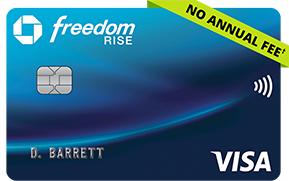
The Chase Freedom Rise® card is designed for people new to credit who want to earn simple cashback while building a credit history. With no annual fee and credit-building tools, it serves as a strong starter card.
Disclaimer:
Card details, rates, fees, and offers may change at any time. We aim to keep this information current but cannot guarantee it will stay accurate, and we are not responsible for issuer updates or errors. Always verify terms on the issuer's website and do your own research before applying.
How Supermarkets and Fuel Stations Influence Rewards Value
Do Warehouse Purchases Count?
Many consumers shop at stores like Sam’s Club or BJ’s, but not all best credit cards classify these as grocery retailers. Always review the card’s terms to see which merchants qualify. Some issuers use Merchant Category Codes (MCCs) to determine reward eligibility, which can vary even between locations of the same brand.
Gas Station Rewards: Network Matters
Rewards at gas stations may differ depending on whether you use a major brand or an independent dealer. For instance, some cards only offer higher cash back at company-owned locations. If you frequently refuel on road trips, a flat-rate card might offer more consistency.
Up to 6% cash back at select grocery stores
3% back on gas purchases with no annual fee
Bonus rewards at EV charging stations
No foreign transaction fees for cross-border travel
Redemption options for gift cards or statement credits
A nurse in Minneapolis uses a high-reward grocery card to buy household essentials and earns over $300 in cash back annually, simply by routing regular spending through the right account. This real-world return showcases how targeted rewards can lead to tangible savings.
Best Credit Cards for Travel and Dining Enthusiasts
Dining out and traveling are common ways Americans spend, and the best credit cards in this category turn leisure spending into long-term value. Many of these cards offer 3x or more points per dollar at restaurants, hotels, or airlines. While some come with annual fees, the travel credits and airport lounge access often justify the cost.
Consider whether you prefer points or cash back. Travel points can offer higher value when redeemed through airline portals or transfer partners, while cash back is simpler and more flexible. Also, check for dining-specific perks like elite status with hotel chains or complimentary dining credits.
Comparing Points Versus Cash Back for Meals and Getaways
Rewards in the form of points typically offer more value if you’re disciplined about booking travel. For example, a card offering 5x points at restaurants might let you transfer those points to airline partners at 1.5 cents each, effectively giving you 7.5% back. Cash back cards usually max out at 4% to 5% in bonus categories.
However, point systems often come with complexity. You’ll need to monitor transfer ratios, blackout dates, and expiration policies. Cash back is straightforward: you earn a fixed amount, and it’s easy to redeem. Your spending habits and travel frequency should guide your decision.
5x rewards on flights and hotels booked directly
$100 annual travel credit to offset airline fees
Free Global Entry or TSA PreCheck application fee
Lounge access through Priority Pass or airline programs
Statement credits for dining at select restaurants
A software developer in Seattle uses a premium travel card to earn points on weekly dinners and quarterly trips. Over two years, he accumulated enough rewards for a flight to Iceland, demonstrating how consistent spending on the best credit cards can unlock free travel experiences.
Best Credit Cards With Low Interest and No Annual Fees
If your goal is to minimize interest charges while still earning rewards, a low-interest card with no annual fee might be your best fit. These cards are ideal for those who carry a balance occasionally or want to consolidate higher-interest debt. While rewards are typically lower than on premium cards, the savings on interest can outweigh that difference.
Look for cards offering a 0% intro APR for 12 to 18 months on purchases and balance transfers. Even after the promotional period, a lower ongoing APR can help if you don’t pay in full every month. Pair this with a no-fee structure, and you have a practical tool for everyday spending without extra costs.
How to Balance Rewards and Interest Rates
Earning cash back is great, but it won’t help much if you’re paying 20%+ in interest. For those who don’t pay their balance in full each month, a no-fee card with a 0% introductory offer can be smarter than a high-reward card with a high APR. This approach prioritizes cost control over point accumulation.
Finsery offers tools to compare APRs and rewards structures side-by-side, helping users find cards that match both their spending and repayment habits. When used responsibly, even a simple no-fee card can become a powerful financial ally.
0% introductory APR for up to 18 months
No annual fee for ongoing affordability
1.5% cash back on all purchases
Balance transfer options with low processing fees
Mobile app alerts for upcoming due dates
A freelance writer in Denver transferred $3,000 from a high-interest card to a no-fee card with a 15-month 0% APR offer. By avoiding hundreds in interest, she freed up budget for home upgrades—proof that the best credit cards aren’t always the ones with flashy rewards.
The content on
Finsery
is created for informational and educational purposes only and should not be taken as financial advice.
While we do our best to ensure accuracy and relevance at the time of publication,
details may change over time or vary by individual circumstance.
Finsery
may earn a small commission when you click on certain links,
but our editorial opinions remain independent.
See our full disclaimer.
Current US Average Credit Card Debt in 2026 Revealed
Updated:
5 min read
Finsery Editorial Team
Finsery Editorial Team
Finance Writers & Reviewers
Editorial Process
Written & Edited by Finsery Team
Reviewed for Accuracy
The Finsery Editorial Team ensures every article meets the highest standards of accuracy and transparency in financial reporting.
Editorial Note:
The information provided on
Finsery
is for general informational purposes only and is not intended as financial or professional advice.
Our team conducts independent research to share insights we believe are accurate and helpful at the time of publication.
Some of the products or services featured on this page are from our
advertising partners,
who may compensate us if you click through links on our site.
However, affiliate relationships do not influence our editorial opinions, our reviews and recommendations remain based on our own independent research and analysis.
Editorial Note:
Finsery provides general informational content only, not financial advice.
We may earn a commission from our advertising partners when you click links, but our editorial opinions remain independent.
What Is the Current Average US Credit Card Debt in 2026
As of 2026, the average US credit card debt per household stands at $6,360, according to aggregated financial data from national consumer credit reports. This represents a 4.7% increase compared to 2025, influenced by sustained inflation, higher borrowing costs, and evolving spending behaviors. Rising interest rates have amplified the cost of carrying a balance, making it harder for consumers to pay down existing debt. Understanding these trends is essential for individuals managing personal finances in today’s economic climate.
A real-world example can be seen in cities like Phoenix and Atlanta, where households reported above-average credit card balances due to increased everyday expenses and limited emergency savings. As credit becomes more expensive, many consumers face the challenge of using cards not just for convenience, but out of necessity. This shift underscores the importance of staying informed about how national debt trends impact individual financial health.
Rising Interest Rates and Credit Card Utilization
The impact of rising interest rates on credit card utilization cannot be overstated. As interest rates increase, credit card companies also raise APRs, making it more expensive to carry debt. This can lead to a cycle of debt accumulation, as consumers may feel pressure to continue using credit to cover essential expenses. In this environment, it’s essential for consumers to prioritize debt repayment, maintain a cash cushion, and monitor their credit utilization ratio.
Who Carries the Most US Credit Card Debt in 2026
Demographic patterns in US credit card debt reveal significant differences among age groups, income levels, and geographic regions. While middle-aged adults historically held the highest balances, data from 2026 shows a notable rise in credit card usage among adults under 35. This younger cohort now accounts for nearly 38% of all new credit card accounts, often using cards to build credit or cover living costs in high-rent urban areas.
Income plays a complex role. Lower-income households are more likely to carry balances due to cash flow constraints, while higher-income individuals may use cards for rewards but still accumulate debt if spending is unchecked. A case in point is Austin, Texas, where rising housing and transportation costs have led even dual-income professionals to rely on credit cards during cash flow shortages. These patterns highlight how both economic pressures and financial habits contribute to national debt levels.
How Age Affects Credit Card Debt Levels
Young Adults (18–34)
Younger consumers often carry lower total balances but are more likely to revolve debt due to limited income and irregular earnings. Many use credit cards to manage student expenses or unexpected medical bills, especially in the absence of emergency savings.
Middle-Aged Adults (35–54)
This group holds the highest average balances, frequently using credit for home improvements, education, or family-related expenses. With more established credit histories, they may have higher limits, increasing the risk of over-leveraging.
Older Adults (55+)
While some older adults pay off balances monthly, others accumulate debt due to fixed incomes and rising healthcare costs. Debt in this group is increasingly associated with supporting adult children or unexpected medical events.
What Are the Main Causes of Rising US Credit Card Debt
Inflation and elevated interest rates are the primary drivers behind the increase in US credit card debt in 2026. The Federal Reserve’s benchmark rate remains at 5.5%, causing credit card APRs to average 24.7% nationwide. With minimum payments absorbing a larger portion of income, principal balances decline slowly, extending repayment timelines. Consumers who only pay the minimum now face an average payoff duration of over eight years for an $6,000 balance.
Another contributing factor is the normalization of credit use for essential spending. Data shows that 41% of credit card transactions in 2026 were for groceries, utilities, and medical bills. A survey in Chicago found that low- and middle-income families increasingly rely on cards when wages fail to keep pace with living costs. This shift signals a structural change in how credit is used across the income spectrum.
How Can Consumers Reduce US Credit Card Debt in 2026
Effective debt reduction starts with creating a realistic budget and prioritizing high-interest balances. The avalanche method—paying off cards with the highest APR first—can save hundreds in interest over time. Alternatively, the snowball method, which focuses on eliminating smaller balances first, offers psychological wins that help maintain motivation. Both strategies require consistent tracking and behavioral adjustments.
Tools like Finsery can help users monitor spending patterns, categorize expenses, and set debt payoff goals automatically. For those overwhelmed by multiple cards, a balance transfer to a 0% intro APR card may provide temporary relief if used responsibly. A case study in Denver showed that households using financial planning apps reduced their credit card balances 27% faster over 12 months compared to those who did not. Access to clear, actionable insights is critical for long-term success.
The content on
Finsery
is created for informational and educational purposes only and should not be taken as financial advice.
While we do our best to ensure accuracy and relevance at the time of publication,
details may change over time or vary by individual circumstance.
Finsery
may earn a small commission when you click on certain links,
but our editorial opinions remain independent.
See our full disclaimer.
An Economic Wild Card: The Iran War and Your Finances
Published:
8 min read
Finsery Editorial Team
Finsery Editorial Team
Finance Writers & Reviewers
Editorial Process
Written & Edited by Finsery Team
Reviewed for Accuracy
The Finsery Editorial Team ensures every article meets the highest standards of accuracy and transparency in financial reporting.
Editorial Note:
The information provided on
Finsery
is for general informational purposes only and is not intended as financial or professional advice.
Our team conducts independent research to share insights we believe are accurate and helpful at the time of publication.
Some of the products or services featured on this page are from our
advertising partners,
who may compensate us if you click through links on our site.
However, affiliate relationships do not influence our editorial opinions, our reviews and recommendations remain based on our own independent research and analysis.
Editorial Note:
Finsery provides general informational content only, not financial advice.
We may earn a commission from our advertising partners when you click links, but our editorial opinions remain independent.
Look no further than your local gas station if you want to see how the Iran war is already shifting financial conditions for U.S. consumers.
Quick takeaway
spikes are driven by disruptions to shipping traffic through the Strait of Hormuz
spikes are driven by disruptions to shipping traffic through the Strait of Hormuz
spikes are driven by disruptions to shipping traffic through the Strait of Hormuz
Oil prices have surged past $100 per barrel and gas prices have increased more than 32% since last month, according to data from AAA, which tracks prices at the pump.
The spikes are driven by disruptions to shipping traffic through the Strait of Hormuz, pushing costs higher for consumers and businesses.
Global energy shocks can ripple into everyday expenses, squeezing consumers’ budgets and potentially fueling inflation that, up to this point, had been trending in the right direction.
We turned to our resident senior economist Elizabeth Renter to make sense of a chaotic picture of economic uncertainty and how it could affect your household’s finances.
The economy was already dealing with a lot of uncertainty before this. How much does the war with Iran actually change the outlook?
War certainly complicates the already complex economic picture. Over the past year, there have been many reasons for general economic uncertainty among consumers, business owners, and even economists and policy makers.
The ability to determine where the economy will be in the near future (and thus what decisions you should be making now) is really dependent on things being fairly predictable or at least similar to conditions we’ve experienced in the past.
The current conditions and potential outcomes are unique and subject to change pretty quickly. That was true before this conflict started, but the many reverberations of war can tangle things in new ways.
Meet MoneyNerd, your weekly news decoder
So much news. So little time. NerdWallet’s new weekly newsletter makes sense of the headlines that affect your wallet.
— but how does that ripple out? Walk me through how a spike in oil prices eventually shows up somewhere like grocery bills.
Energy prices are the obvious first impact
The most obvious place consumers feel a shock to the oil supply is in prices at the pump. Many of us fill our tanks frequently, or at least see these prices rising on streetside signs on our commutes. But this also has a fairly quick impact on goods prices, including groceries.
Whether they’re transported via air or 18-wheeler, our groceries rely on fuel to make it to store shelves. And when retailer costs rise due to higher transport costs, they tend to pass this along to consumers in the form of higher prices.
Even before transport, however, many goods producers use fuel in the manufacturing process, and those costs can be passed along too. This is also true for agriculture, where farm machinery and fertilizer depend on energy prices. When costs rise at nearly every stage of production, it’s easy to see how consumer prices can be hit from several angles.
Inflation had been cooling. Can a surge in energy prices undo that progress, or are we in a different place than we were in 2021-22?
Inflation had been cooling down since its peak in mid-2022, but progress getting it to the Fed’s 2% goal was slowing even before the war began. How big of an impact the war has on inflation really boils down to how long it goes on, including the time it takes to recover full operation of oil supply chains.
The longer it lasts, the more the impact feeds into other inflationary pressures including increased government spending and inflation expectations. The more households and businesses expect to see higher inflation, the more they’ll act in anticipation of it, driving inflation upwards through demanding higher wages, setting higher prices and so on.
I don’t think the conflict will drive inflation to levels we saw in 2022 — the factors driving that bout were far different — but it could undo some of the ground we’ve gained in getting it down from that point.
We usually think about energy shocks hitting things like transportation or manufacturing. But increasingly the tech sector — especially AI and data centers — is extremely energy-intensive. Could higher energy prices from this conflict ripple into the AI economy?
Certainly, the companies behind these data centers are likely to see increased energy costs, potentially raising costs for operation and new data center construction.
These tech companies tend to be well financed, so they may be able to absorb some of the increased costs. But it could eat into profits and slow down construction, particularly if the conflict goes on long enough to affect manufacturing and the transportation of construction materials.
At what point does this stop being a numbers story and start affecting how people feel about the economy — and how they spend?
This is likely already impacting how people feel about the economy. Economic sentiment never fully recovered after the pandemic, and has been in the doldrums for over a year.
The most recent data suggests the war could take sentiment to new lows.
A big story this past year has been that consumers continue spending despite feeling bad. This can only continue so long, as financial discomfort among households can eventually spread to higher earners, too. At which point we’ll see a drawback in spending appear in the big economic indicators.
Gross domestic product (GDP) in the fourth quarter last year came in lower than expected. Do you still see growth continuing through this, and what’s actually holding the economy up right now?
Growth is expected to slow this year, and I think what we saw in the fourth quarter is the beginning of that slow-down. This is driven in part by a shrinking labor force due to immigration policies, protectionist trade policy and continued economic uncertainty.
Consumer spending continues to drive the growth we’re seeing, but this spending is largely coming from households with assets — stocks and real estate have insulated some households from financial shocks.
Higher tax refunds this spring could keep consumer spending aloft and government spending tied to the war would also contribute to GDP figures, but I think economic growth over the year will be weaker.
Does this raise the recession risk, or is the more likely outcome just slower growth?
Oil shocks certainly raise the risk of recession, but they’re rarely enough to cause a recession alone. The U.S. is more insulated now from global oil shocks than ever before, since we make most of what we consume. But we’re still actors in a global market and this oil shock involves a war.
The word “stagflation” is starting to come up again. Is that a real risk here, or is it premature?
Stagflation refers to high inflation and low economic growth happening simultaneously. This isn’t generally how the mechanics of the economy works — inflation typically goes hand in hand with a hot, growing economy. I think the current conditions suggest a risk of stagflation. If this happens, it puts the Fed’s dual mandate — stable price growth and full employment — at odds. They’d be forced to pick a priority: Raise rates to tamp down inflation or lower them to stoke growth.
How does this complicate the Fed’s path? If energy drives inflation back up, does that push rate cuts off the table?
The Fed is currently keeping rates in a place that they believe positions them to react quickly to either inflation (by raising rates) or a weakening labor market (by lowering them).
This neutral place is where rates are neither stimulative or restrictive. If inflation begins to rise, and there is reason to believe it will continue in that direction if left unchecked, they will raise rates.
In the meantime, I think they’ll be reluctant to cut, barring a pretty clear message from the data that inflation is cooling again and the labor market needs support.
What are you watching most closely in the next few weeks to know whether this becomes a real economic shock?
I’m looking for clarity on the potential duration of this conflict. The difference between a month or three months, for example, could be significant in terms of economic impact. I’m also keeping a close eye on consumer spending. If we see consumers at-large tighten their purse strings, the primary driver of our limited economic growth will dissipate.
For s of the headlines — what should ordinary people actually be paying attention to right now?
someone just trying to make sense
The best thing households can do in times of economic uncertainty is revisit their emergency fund. Whether prices rise or your hours are reduced at work, an emergency fund can make a huge difference in your resilience.
Second, address your budget. If you don’t have an ample emergency fund, consider cutting out some unnecessary expenses to create some wiggle room should unexpected expenses or higher prices arise.
n Economic Wild Card
spikes are driven by disruptions to shipping traffic through the Strait of Hormuz
If you’re watching the headlines to see where all of this is headed, pay attention to how long the conflict might last. This will be key to the extent of the impact across the economy, including household finances.
Your financial journey starts here
Be the first to receive expert financial insights, guides, and product reviews when our newsletter launches.
Stay ahead with smarter money decisions.
By clicking "Subscribe," you agree to join our early access list and accept our
Privacy Policy
and
Terms of Use
. You may unsubscribe at any time.
The content on
Finsery
is created for informational and educational purposes only and should not be taken as financial advice.
While we do our best to ensure accuracy and relevance at the time of publication,
details may change over time or vary by individual circumstance.
Finsery
may earn a small commission when you click on certain links,
but our editorial opinions remain independent.
See our full disclaimer.
Best Bank of America Credit Cards for April 2026
Updated:
7 min read
Finsery Editorial Team
Finsery Editorial Team
Finance Writers & Reviewers
Editorial Process
Written & Edited by Finsery Team
Reviewed for Accuracy
The Finsery Editorial Team ensures every article meets the highest standards of accuracy and transparency in financial reporting.
Editorial Note:
The information provided on
Finsery
is for general informational purposes only and is not intended as financial or professional advice.
Our team conducts independent research to share insights we believe are accurate and helpful at the time of publication.
Some of the products or services featured on this page are from our
advertising partners,
who may compensate us if you click through links on our site.
However, affiliate relationships do not influence our editorial opinions, our reviews and recommendations remain based on our own independent research and analysis.
Editorial Note:
Finsery provides general informational content only, not financial advice.
We may earn a commission from our advertising partners when you click links, but our editorial opinions remain independent.
Munwar Best Bank of America Credit Cards for Rewards and Spending Optimization
Choosing the right Bank of America credit card can significantly enhance your rewards, boost cash back, and support credit-building goals. With a range of options spanning travel, everyday purchases, and credit rehabilitation, these cards are designed to align with distinct financial behaviors. This guide evaluates the top Bank of America credit cards available in April 2026, spotlighting sign-up bonuses, rewards structures, and strategic advantages. A real-world example: a household spending $300 monthly on groceries and fuel could earn over $360 in annual cash back with the right card.
How Bank of America Rewards Programs Work in 2026
Bank of America’s credit card rewards are primarily driven through the Preferred Rewards program, which enhances earning rates for eligible cardholders. Customers who maintain a combined qualifying banking relationship of $20,000 or more with Bank of America or Merrill accounts receive boosted rewards—up to 75% more with the Platinum Honors tier. These enhanced rates apply across most Bank of America credit cards, making integration with banking services a strategic advantage.
For instance, the Bank of America Customized Cash Rewards card earns 3% cash back in a selected category (such as gas, online shopping, or dining), 2% on groceries, and 1% on all other purchases. With Preferred Rewards Gold status (requires $20,000–$49,999 in combined account balances), those rates increase to 5.25%, 3.5%, and 1.75%, respectively. This program transforms modest baseline rewards into compelling long-term value for bank-loyal consumers.
The Bank of America Preferred Rewards program has five tiers: Standard (no requirement), Gold ($20,000), Platinum ($50,000), Platinum Honors ($100,000), and Private Bank ($1 million+). Each tier increases cash back and point multipliers across eligible credit cards. Enrollment is automatic if you meet the balance criteria and opt-in to rewards.
Qualifying balances include Bank of America checking and savings accounts, certificates of deposit, IRAs, 401(k) rollovers, and Merrill investment accounts. Only accounts in good standing count toward the total. Business accounts may qualify if linked to a personal relationship.
Top 4 Bank of America Credit Cards for 2026
Narrowing down the best Bank of America credit cards requires evaluating rewards alignment, spending patterns, and credit profile. The following selections represent the most valuable cards across different user scenarios—from high spenders to those rebuilding credit. Each card leverages the Preferred Rewards ecosystem, but distinct features make them suited to specific financial strategies.
1. Bank of America® Customized Cash Rewards Secured Card
This card is uniquely designed for consumers building or restoring credit while earning cash back. It stands out by offering the same rewards structure as its unsecured counterpart—3% in a category of choice, 2% on groceries, 1% elsewhere—even with a secured deposit. It’s best for individuals with limited or damaged credit seeking to rebuild while earning meaningful rewards.
A key benefit is its integration with Preferred Rewards, which can amplify earnings beyond most secured cards. However, it requires a security deposit typically starting at $200, limiting immediate accessibility for some. Unlike many secured cards, it reports to all three credit bureaus, supporting long-term credit growth.
2. Bank of America® Customized Cash Rewards Credit Card
This unsecured card offers flexible bonus categories and no annual fee, making it ideal for mid- to high-income earners with good credit. The standout feature is the ability to customize the 3% category monthly, offering adaptability for variable spending. It’s best for households that prioritize flexibility across gas, dining, or online purchases.
With Preferred Rewards engaged, cash back climbs significantly—reaching 5.25% in the custom category. A limitation is the $1,500 annual cap on combined cash back from bonus categories. For a consultant earning $80,000 annually who spends heavily on ride-sharing and meal delivery, this card can yield over $400 in rewards per year with proper category selection.
3. Bank of America® Travel Rewards Credit Card
This card provides unlimited 1.5 points per dollar on all purchases with no foreign transaction fees, appealing to frequent travelers and everyday spenders. Points are valuable at 1 cent each when redeemed for travel through the Bank of America portal, and worth more if transferred to airline partners. It’s best for those who prefer simplicity and broad earning potential without category tracking.
A major advantage is the $100 statement credit for Global Entry or TSA PreCheck every four years, enhancing travel efficiency. However, points do not earn a bonus through Preferred Rewards, making it less lucrative for Bank of America banking customers compared to cash back cards. High spenders may find the flat rate less rewarding than premium travel cards with elevated category bonuses.
4. BankAmericard® Credit Card
The BankAmericard serves as a strong no-fee credit-building tool with a simple, long-term approach. It offers an introductory 0% APR on purchases and balance transfers for 18 billing cycles, then transitions to a variable rate. It’s best for individuals focused on debt consolidation or managing large purchases interest-free over time.
A key benefit is the absence of a penalty APR for late payments—a rarity in the credit card market—supporting financial recovery. It does not earn rewards, which limits appeal for cash back seekers. Still, for a homeowner financing $3,000 in kitchen repairs without immediate cash, the 0% intro period offers substantial breathing room.
The Customized Cash Rewards card offers a $200 cash back bonus after spending $1,000 in the first 90 days. The Travel Rewards card provides 25,000 online bonus points after $1,500 spent in the first 90 days, valued at $250 toward travel. Bonus terms vary by eligibility and creditworthiness.
The Secured Card is accessible with poor credit (scores below 600). The Customized Cash and Travel Rewards cards typically require good to excellent credit (670+). The BankAmericard may be available starting around 650, depending on debt-to-income ratio and history.
Maximizing Bank of America Card Benefits with Preferred Rewards
Leveraging the Preferred Rewards program is essential to extracting maximum value from most Bank of America credit cards. Without it, baseline rewards remain competitive but unspectacular. With it, especially at Platinum or Platinum Honors levels, earnings can outpace many premium cards—particularly for cash back earners.
For example, a couple maintaining a $75,000 combined Bank of America and Merrill investment balance qualify for Platinum status, multiplying their Customized Cash Rewards earnings by 1.5x. On $20,000 in annual spending across bonus categories, this equates to an extra $140 in cash back annually. Strategic deposit timing—such as parking a tax refund in a high-yield savings account—can temporarily boost balances to unlock higher tiers.
Finsery pro tip
To maintain Preferred Rewards status, schedule recurring deposits between checking and savings accounts to sustain required balances without locking funds. This liquidity management technique ensures eligibility while preserving access to cash.
Strategic Credit Card Optimization at the Advanced Level
Advanced users optimize across product stacking, bonus timing, and credit utilization effects. Running multiple Bank of America cards—such as pairing the Travel Rewards card for daily spend and the Customized Cash Rewards card for targeted bonus categories—can segment rewards efficiently. However, this increases credit exposure and requires disciplined payment tracking.
Issuer perception matters: Bank of America typically limits consumers to two credit cards and reviews aggregate exposure before approving new accounts. Applying for a second card too soon after the first may trigger denials. A strategic approach is to wait 6 to 12 months, demonstrate strong payment history, and increase income documentation before submitting another application.
Consider a dual-card holder earning 5.25% back on groceries via Customized Cash Rewards (with Preferred Rewards) and redeeming Travel Rewards points for international flights. By allocating spend precisely and timing bonus redemptions during travel portal multipliers, they can achieve effective redemption values exceeding 2 cents per point.
Comparing Card Features and Selecting Your Best Fit
Selecting the optimal Bank of America credit card hinges on aligning rewards structure, credit profile, and financial objectives. The following comparison highlights critical differentiators:
The Customized Cash Rewards Secured Card is unmatched for credit rebuilders who want to earn while repairing their score.
The unsecured Customized Cash Rewards card delivers the highest effective cash back for Preferred Rewards members with variable spending.
The Travel Rewards card is ideal for those seeking simplicity and international usability without foreign fees.
The BankAmericard is best for low-interest financing, especially for balance transfers or large purchases.
A retiree living on fixed income and paying cash for most expenses may prioritize the BankAmericard for emergency spending, while a digital nomad might favor the Travel Rewards card for global access. Each card serves a distinct niche, and combining them strategically—where credit allows—unlocks layered financial efficiency. Finsery recommends aligning card choice with both current behavior and anticipated life changes, such as upcoming travel or home renovations.
The Bank of America Travel Rewards card has no foreign transaction fees, making it suitable for international travel. Other cards in the lineup, including the Customized Cash Rewards series, charge a 3% fee on foreign purchases, limiting their overseas usefulness.
The BankAmericard does not impose a penalty APR, even after missed payments. Most other Bank of America cards will increase the APR to the penalty rate, which can exceed 29.99%, after 60 days of nonpayment.
[EDITOR REVIEW REQUIRED]
The content on
Finsery
is created for informational and educational purposes only and should not be taken as financial advice.
While we do our best to ensure accuracy and relevance at the time of publication,
details may change over time or vary by individual circumstance.
Finsery
may earn a small commission when you click on certain links,
but our editorial opinions remain independent.
See our full disclaimer.
 Finsery Editorial Team