
The 28-Point Surprise


Alex had never in his life missed a credit card payment. Always well ahead with the payment, he more often than not paid months in advance. Therefore, when one day the credit card company approved another card for him at a much higher interest rate than he was expecting, he was puzzled.
After further digging, he discovered that it wasn’t a problem of when he paid but how his balance was appearing on his statement. That month, the statement had closed with a higher balance than usual, which slightly raised his credit utilization and caused a surprising 28-point score drop. It helps remind that your credit score is not just about paying bills but even how algorithms interpret small changes in credit usage.
Alex never missed a payment on credit card debt. His payments were always on time, sometimes early. One month, however, a payment reduced his credit score by 28 points. The problem wasn’t a late payment but how information from closing a credit card statement affected his credit score.
What’s surprising is that it underlines an important reality that most people are not even aware of. A credit score is not just important because you pay your bills on time. Even if you have credit cards, your credit score is continually working in the background to influence lending decisions in a variety of ways.
What is a credit score?
A credit score is a numerical figure with three digits that indicates a consumer’s likelihood of repaying borrowed money on time. According to the Consumer Financial Protection Bureau (CFPB), the credit score scale ranges from 300 to 850, where a higher credit score indicates a lower credit risk.
In other words, the credit score definition can be narrowed down to a ‘trust factor.’ The banks and credit card companies rely on your credit score to make a ‘yes’ or ‘no’ decision on lending you money, based on which they will charge you an interest rate.
One of the most widely used credit models is the FICO credit score, which nearly all lenders in the USA currently use for credit card, car, and mortgage lending.
How is a credit score calculated?
The credit score calculation used by FICO follows a consistent formula. While the exact math isn’t public, the credit score percentage breakdown is well known.
[ays_chart id=”3″]
Credit score factors (FICO Model)
| Factor | Weight | Impact Level |
|---|---|---|
| Payment history credit score | 35% | Very High |
| Credit utilization ratio | 30% | Very High |
| Credit history length | 15% | Medium |
| Credit mix meaning | 10% | Low |
| New credit inquiries | 10% | Low |
Together, these credit score components form the foundation of your score.
This is the most important factor and answers one simple question: Do you pay on time?
-
- Late payments may remain on your credit report for seven years.
- According to the Equifax, even a single 30-day overdue payment can significantly lower your credit score.
- Paying at least the minimum by the due date protects your score
More important than perfection for credit-card users is consistency.
Your credit utilization ratio measures the percentage of available credit you’re using.
Example: $2,000 balance on a $10,000 limit = 20% utilization
What many beginners miss:
-
- Utilization is calculated when your statement closes, not when you pay
- Even with low overall usage, high utilization of a single card can hurt.
One of the quickest ways to raise it is by keeping utilization below 30 percent and ideally, below 10 percent.
The length of a person’s credit history contributes around 15% to their overall FICO score and shows just how long a person has been using credit.
This factor examines:
The age of your oldest account, which indicates how long you’ve been using credit
“The average age of all accounts, indicative of overall consistency”
When you open new credit cards, your average age of credit will be temporarily lowered, regardless of your payments. Canceling your old credit cards can further decrease your length of credits. This means that once your closed accounts are removed from your credit report, your average credit age can drop. As such, opening your fee-free credit cards improves your overall credit.
Credit mix is approximately 10% of your overall FICO score and refers to the types of credit that you manage. These can include credit cards, auto loans, and mortgages. A credit mix can be favorable if you manage various kinds of credit. A high percentage of bad credit can significantly impact your credit score.
However you don’t have to have each type of credit in order to have a healthy credit score. Many consumers can attain top-notch credit scores by using only credit cards, especially at a younger age when you are initially starting your credit experience. The type of credit you have becomes relevant in a later stage, when you are already established with a strong payment history and usage of your credit accordingly.
A better strategy for both beginners and seasoned consumers would be to emphasize managing credit card usage in a responsible manner rather than extending credit for the sole purpose of improving their credit mix.
Inquiries for new credits also constitute about 10% of your credit score. Whenever you apply for a credit card or a loan, your lender performs a hard inquiry on your credit report.
Key points to know:
-
- Just one query can reduce your score by a few points
- Several applications within a brief time frame can imply a higher risk for the lender
- They are part of your credit file for as long as two years; however, the effect lessens with time
It’s especially important to space out applications when establishing credit for the first time. It will help to protect your score and increase your chances of being approved for other credit cards in the future.
Credit score sanges explained
Credit score ranges make understanding your score and insight into the lender’s reaction to your application possible. A typical score will range between 300 and 850, with varying levels of risk that the credit card company will perceive. Knowing your score will put you at an advantage since the higher your score, the better your opportunities will be to get approved and get low interest rates and higher lines of credit.
| Credit Score Range | What It Means |
|---|---|
| 300–579 | Poor |
| 580–669 | Fair |
| 670–739 | Good |
| 740–799 | Very Good |
| 800–850 | Excellent |
If you’re wondering what a good credit score is, most lenders consider 670 or higher to be good credit.
A high credit score typically means lower APRs, better limits, and more flexibility when applying for loans or buying a home.
How credit cards help you build credit
Credit cards are one of the most effective ways for learning credit-building foundations because they report all their activities to all three credit bureaus monthly. Compared to taking out a loan, using a credit card will give you multiple months to show responsible behavior, which will affect your score.
Credit scores can be built by focusing on the following basics:
- Pay on time, every time. Making payments on time can improve your payment history, which is the most significant factor that determines your scores.
- Keep balances low: Having low balances reflects positively on your ability to manage credit wisely without overusing it.
- Use cards frequently, but lightly, by charging small amounts regularly. This will keep accounts active and establish a positive credit history.
These habits work whether you’re a credit score newbie, establishing your credit, or rebuilding your credit. Credit cards, when managed properly, build a consistent pattern with positive information, which helps your credit score.
PRO TIP
How long does it take to build credit?
If you’re wondering how long it takes to establish credit scores, the answer is this: it’s not how quickly you can build your scores that matters, but how consistently you do it. So if you are asking how long it takes to build credit scores, the answer is that it depends on consistency and not shortcuts. Your scores are made up of patterns of behavior over time. Lenders look for predictability and consistency in behavior
Generally, people perceive progress in levels:
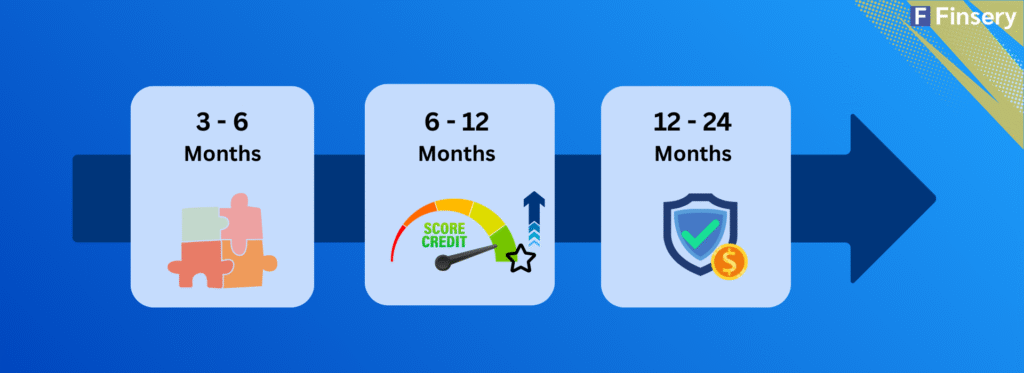
- 3-6 months: The process of acquiring a credit score will begin when your first credit card or loan is reported to a credit bureau. In this level, a single payment can help, though you might see your scores kick around a bit.
- 6–12 months: By making payments on time and ensuring a low credit utilization rate, improvements will be visible. This is the point at which many people upgrade to a good credit score to be eligible for better entry-level credit cards.
- 12–24 months: Your credit record will also become more stable. The average age of your accounts will increase, your use patterns will be determined, and creditors will view a less risky borrower.
It is at this point in your credit life that most people are offered lower APR credit cards, higher credit lines, and better reward cards. There’s no magic solution when it comes to this, and credit scores improve much quicker than one might think. Regular use of credit cards, coupled with responsible payment behavior, is the key to success. Building credit? Pace yourself because slow always beats fast.
Credit scores aren’t built by shortcuts — they’re built by consistent habits that get reported month after month
How to improve credit score
If you want to know how to raise your credit score in a hurry, you need to begin by implementing strategies that impact the largest credit-score-weighting factors. Although you can’t do it overnight, consumers using credit cards can implement changes that create a positive impact in a few statement cycles.
The best approaches are:
- Paying down credit card balances to lower your credit utilization ratio, which has a major impact on your credit score
- Avoiding new credit inquiries unless necessary, since multiple applications in a short time can slow score growth
- Keeping older accounts open to protect your credit history length and maintain stability
Paying in full reduces usage and prevents the accrual of interest. Rapid credit score increases can be achieved through clever, low-risk behavior. Making progress in credit scores always trumps rapid improvement in the long run.
Credit Building Is a Pattern, Not a Shortcut
- Building up great credit doesn’t happen with quick credit score hacks; it’s all about doing the right thing over and over. On-time bill payment, keeping credit-card balances low in relationship to limits, and managing accounts wisely are all part of building long-term habits that will strengthen your score month after month.
- That’s exactly what Alex learned. Once he realized the problem wasn’t when he was paying, but rather what balance was being reported when his statement closed, he changed his strategy. He started paying down his card before the statement date and keeping utilization low; now his score stabilized pretty fast-no more surprises.
With Finsery to guide him, Alex finally felt confident. He wasn’t guessing; he actually knew how credit scoring works, and he made smarter credit decisions with a clear plan.
Alex realized strong credit isn’t built overnight; it’s built through lasting habits, and it’s those habits that will turn good credit into real financial freedom.
Frequently Asked Questions
Back to topEven if you paid on time, your score can drop if your reported balance increased. Credit card issuers usually report your balance around the statement closing date, so if the statement closes with a higher balance, your credit utilization ratio rises and your score may temporarily decrease.
Yes, it can. Paying early helps lower the balance before it gets reported, which reduces your credit utilization. Lower utilization generally supports a better score, especially if you bring your balance down before the statement closing date.
To avoid fees and interest, the due date is the most important consideration. However, for improving your credit score, the statement closing date matters more because your utilization is largely based on the balance reported at statement closing, not what you pay later
Your current balance changes daily as you spend and pay. Your statement balance is the amount recorded on the statement closing date. Since issuers typically report monthly statement information, the statement balance often has the biggest impact on your reported credit utilization.
No. Checking your own credit score is a soft inquiry, and it does not lower your score. Only hard inquiries, like applying for a credit card or loan, can slightly impact your score.
Most credit card companies report to the credit bureaus once per month, typically around your statement closing date (end of the billing cycle). This is why the balance shown on your statement is often the balance that gets reported. The Consumer Financial Protection Bureau (CFPB) explains that credit card periodic statements include the closing date of the billing cycle and the balance information tied to that cycle.
Not necessarily, but it isn’t always ideal. If your cards consistently report a $0 balance, scoring models may not see active credit usage. Many consumers see better results when one card reports a small balance, usually around 1%–9% utilization. According to FICO (myFICO), having an active credit card account with low utilization can be better for your FICO® Scores than having no utilization at all.