
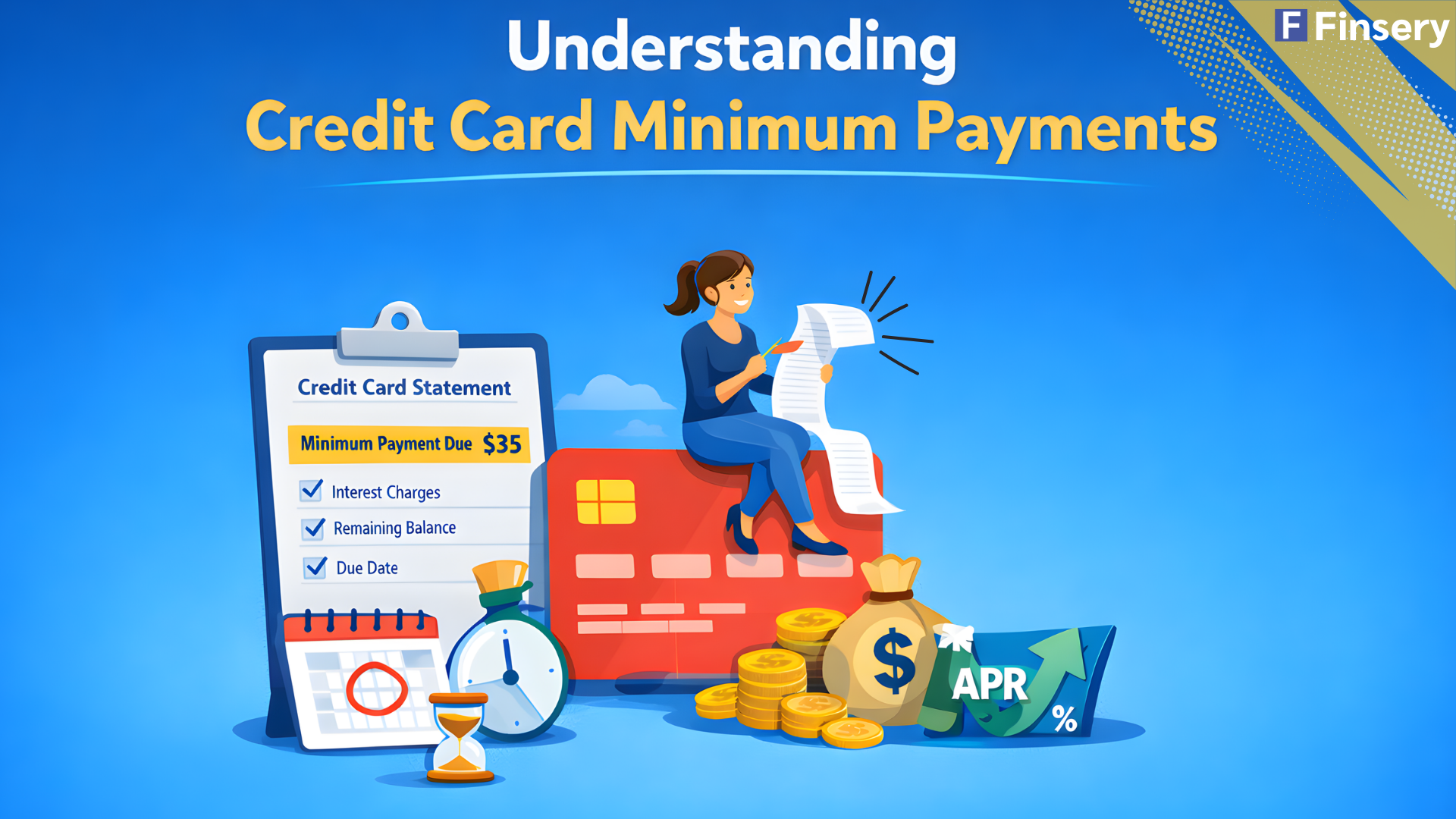
When you get your credit card statement, you’ll notice a minimum payment listed. This is the smallest amount you need to pay to avoid late fees and keep your account in good standing. Although paying just the minimum might seem easier, it can end up costing you more in interest and take longer to pay off your balance.
Knowing how minimum payments work can help you avoid extra debt and make smarter choices about paying your credit card. In this guide, we’ll cover what a credit card minimum payment is, how it’s figured out, and how it can change the amount of interest you pay and how long it takes to pay off your card.
What is a Credit Card Minimum Payment?
A credit card minimum payment is the lowest amount due each month to keep your account active and avoid late fees. This amount appears on your statement as the minimum due. Paying only the minimum protects your credit score from late payments, but the remaining balance will continue to accrue interest.
The minimum payment is typically 1% to 3% of your balance, or a fixed amount of $25 to $40, whichever is higher. It includes part of your balance, interest charges, and any fees or overdue amounts. Paying more than the minimum reduces interest costs and helps you pay off debt faster.
How is a Credit Card Minimum Payment Calculated?
In the US, credit card companies use a standard formula to figure out your minimum payment. This formula ensures you pay off a small portion of your balance each month, along with interest charges. Usually, the minimum payment is 1% to 3% of what you owe, plus interest and any fees from that billing cycle.
Common minimum payment calculation methods
Many credit card companies set the minimum payment as a fixed percentage of your balance, usually between 1% and 3%. For instance, with a $3,000 balance and a 2% minimum rate, your payment would be $60.
Most issuers set the minimum payment at 1% of the principal balance, plus interest and fees. This approach prioritizes interest payments while gradually reducing the principal.
Formula: Minimum Payment = Total Balance × Percentage) + Interest Charge + Late/Penalty Fees
For example:
- Balance: $5,000
- Minimum percentage: 1% = $50
- Monthly interest: $75
- Total minimum payment = $125
Most US credit cards set a minimum payment floor, typically between $25 and $40. If your calculated minimum is below this amount, you are still required to pay the fixed minimum. For example, if your calculated minimum is $18, your issuer may require a $25 payment.
Since minimum payments are low relative to your balance, paying only the minimum each month can greatly extend your repayment period and increase total interest costs.
Estimate How Long it Will Take to Pay Off Your Credit Card Balance
Paying only the minimum on your credit card extends your repayment period and increases total interest costs. A minimum payment calculator helps you see how your balance, APR, and payment strategy impact your payoff timeline.
Use the Finsery calculator below to adjust your credit card balance, annual interest rate (APR), and minimum payment method. You will see your estimated monthly payment, total interest cost, and the time required to pay off your balance.
You can also compare minimum payments vs fixed monthly payments to see how paying extra each month could reduce your payoff time and save you money in interest.
Finsery Pro Tip
What Happens If You Only Pay the Minimum?
Paying only the minimum on your credit card keeps your account current, but increases total interest and extends repayment time. Although convenient in the short term, this approach makes it harder to become debt-free.
Pros
- Avoid late fees: Paying at least the minimum amount helps you avoid late-payment penalties.
- Protect your credit score: On-time minimum payments help maintain a positive payment history.
- Keep your account active: Your card remains in good standing with the issuer.
Cons
- Debt cycle risk: Carrying a balance each month can lead to long-term debt, especially if you continue to make new purchases.
- High interest costs: Most payments cover interest rather than reducing your balance.
- Long payoff time: Paying only the minimum can take years to eliminate even a moderate balance.
How Minimum Payments Affect Interest Charges
Paying only the minimum on your credit card increases total interest charges, since most of your payment goes toward interest rather than reducing the principal. As a result, your balance continues to accrue interest each month, making it more difficult to pay off your debt.
- Compounding interest: Credit card interest compounds over time, so you pay interest on both your remaining balance and previously accrued interest. The longer you carry a balance, the more your total repayment cost increases.
- Daily balance method: Most US credit cards use the average daily balance method to calculate interest. Your issuer calculates interest daily based on your balance and APR, then adds it to your statement at the end of the billing cycle. If you pay only the minimum, the remaining balance continues to generate daily interest.
- Statement cycle impact: Your statement cycle determines when interest is calculated and added. If you pay only the minimum, the remaining balance carries over to the next cycle and continues to accrue interest. Paying your full statement balance by the due date is the best way to avoid interest charges.
Paying the minimum keeps you safe from penalties, but paying more than the minimum is what truly saves you money and helps you become debt-free faster.
How to Reduce Credit Card Interest Faster
To pay off your credit card faster and reduce interest charges, consistently pay more than the minimum. Because interest compounds, even small additional payments can lower your total repayment cost and shorten payoff time.
Strategies to pay off credit card debt faster
- Pay more than the minimum: When you pay more than the minimum, you lower your main balance, so you’ll pay less interest in the future. Even adding $50 or $100 extra each month can really help.
- Use the avalanche method: The debt avalanche method means you pay off the card with the highest interest rate first, while making minimum payments on your other cards. This way, you pay less interest overall.
- Use the snowball method: With the debt snowball method, you start by paying off your smallest balances first. After you pay off one card, you use that payment amount to tackle the next debt.
- Consider a balance transfer card: Some credit cards offer 0% introductory APR balance transfers, which can help you temporarily avoid interest and pay down your balance faster. This works best if you can pay off the balance before the promotional period ends.
- Make extra monthly payments: Making multiple payments during the month or paying more than once per billing cycle can reduce your average daily balance, which may lower your interest charges.
Final Thoughts
Making the minimum payment on your credit card can keep your account in good standing and help you avoid penalties. However, it is not a good long-term way to pay off your debt. If you only pay the minimum, you will likely pay more in interest and take much longer to pay off what you owe.
It is best to pay more than the minimum whenever you can. Learn how interest works and use helpful tools to plan your payments. By following a good plan and making regular payments, you can pay off debt faster, spend less on interest and build better financial habits.